Pathophysiology · 1-23
成長ホルモン・プロラクチン過剰分泌
Overproduction of growth hormone and prolactin
- 応用トピック
- 続発性無月経先端巨大症とプロラクチノーマ
🧠 GH 過剰の症状は4系統に整理できる(糖尿病・骨/軟骨・内臓肥大visceromegaly内臓肥大(visceromegaly)visceromegaly(内臓肥大)・プロラクチン様作用)。骨端線epiphyseal line骨端線(epiphyseal line)epiphyseal line(骨端線)が閉じる前なら巨人症Gigantism巨人症(Gigantism)Gigantism(巨人症)、後なら先端巨大症acromegaly先端巨大症(acromegaly)acromegaly(先端巨大症)。プロラクチン過剰は別に「乳汁分泌lactation (milk secretion)乳汁分泌(lactation (milk secretion))lactation (milk secretion)(乳汁分泌)+GnRH抑制で性腺機能低下症hypogonadism性腺機能低下症(hypogonadism)hypogonadism(性腺機能低下症)」を起こす。
成長ホルモンの調節と作用
- GHRH(拍動性pulsatile拍動性(pulsatile)pulsatile(拍動性))→ GH、ソマトスタチン が抑制。GH の多くは肝の IGF-1 を介する。
| 組織 | GH の効果 |
|---|---|
| 肝 | タンパク質合成↑、糖新生↑、IGF-1↑ |
| 筋 | グルコース取込み↓、アミノ酸取込み↑ → 筋量↑ |
| 脂肪組織 | グルコース取込み↓、脂肪分解lipolysis脂肪分解(lipolysis)lipolysis(脂肪分解)↑ → 体脂肪↓ |
| その他 | 臓器サイズ/機能↑;軟骨:長軸方向の骨成長↑ |
先端巨大症/巨人症(症状を4群で)
- 通常 下垂体GH産生腺腫(視神経圧迫optic nerve compression視神経圧迫(optic nerve compression)optic nerve compression(視神経圧迫)→ 視野欠損visual field defect視野欠損(visual field defect)visual field defect(視野欠損))。骨端閉鎖epiphyseal closure骨端閉鎖(epiphyseal closure)epiphyseal closure(骨端閉鎖)前→巨人症Gigantism巨人症(Gigantism)Gigantism(巨人症)、後→先端巨大症acromegaly先端巨大症(acromegaly)acromegaly(先端巨大症)。
flowchart TD
  AD["下垂体GH産生腺腫 → GH過剰"] --> DM["① 糖尿病:血糖↑→インスリン抵抗性→T2DM"]
  AD --> BO["② 骨/軟骨:手足顔の変形・大きな鼻/顎・<span class='jp-term jp-term-diagram' title='carpal tunnel syndrome'>手根管症候群</span>(carpal tunnel)・<span class='jp-term jp-term-diagram' title='arthropathy'>関節症</span>(arthrosis)"]
  AD --> VI["③ <span class='jp-term jp-term-diagram' title='Visceral growth'>内臓肥大</span>:<span class='jp-term jp-term-diagram' title='macroglossia'>巨舌症</span>・<span class='jp-term jp-term-diagram' title='cardiac hypertrophy'>心肥大</span>(cardiomegaly)(HTN/不整脈)・<span class='jp-term jp-term-diagram' title='colorectal polyps'>大腸ポリープ</span>(colon polyps)"]
  AD --> PR["④ プロラクチン様作用:GnRH↓→<span class='jp-term jp-term-diagram' title='galactorrhea'>乳汁漏出症</span>(女)・<span class='jp-term jp-term-diagram' title='gynecomastia'>女性化乳房</span>(gynecomastia)(男)"]
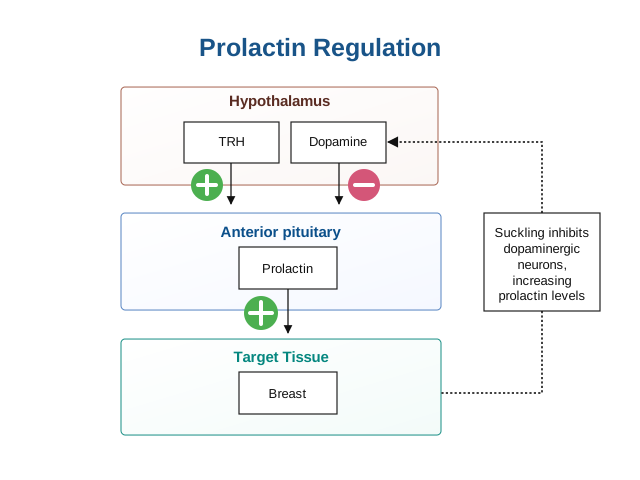
プロラクチンの調節
💡 プロラクチンの主ブレーキはドパミン。 だから「ドーパミンdopamineドーパミン(dopamine)dopamine(ドーパミン)が減る/遮断される」とプロラクチンが上がる(茎損傷、抗精神病薬など)。
- 抑制: 視床下部ドーパミンdopamineドーパミン(dopamine)dopamine(ドーパミン)(プロラクチン自身がドーパミンdopamineドーパミン(dopamine)dopamine(ドーパミン)を誘導 → 自己抑制)。
- 刺激: TRH、エストロゲン、乳房刺激。
- 効果: 乳房腫大+乳汁産生、GnRH抑制(FSH/LH↓)。
高プロラクチン血症
原因
- ドーパミンdopamineドーパミン(dopamine)dopamine(ドーパミン)効果↓: 乳房刺激、下垂体茎pituitary stalk下垂体茎(pituitary stalk)pituitary stalk(下垂体茎)の損傷/圧迫。
- TRH↑: 原発性・続発性甲状腺機能低下hypothyroidism甲状腺機能低下(hypothyroidism)hypothyroidism(甲状腺機能低下)症。
- 医原性: ドーパミンdopamineドーパミン(dopamine)dopamine(ドーパミン)受容体遮断receptor blockade受容体遮断(receptor blockade)receptor blockade(受容体遮断)薬(抗精神病薬、降圧薬antihypertensives降圧薬(antihypertensives)antihypertensives(降圧薬)、抗潰瘍薬Antiulcer drugs抗潰瘍薬(Antiulcer drugs)Antiulcer drugs(抗潰瘍薬))。
- クリアランス不足: 腎不全、マクロプロラクチン血症macroprolactinemiaマクロプロラクチン血症(macroprolactinemia)macroprolactinemia(マクロプロラクチン血症)。
- プロラクチノーマProlactinomaプロラクチノーマ(Prolactinoma)Prolactinoma(プロラクチノーマ)(またはプロラクチン+GH共分泌)。
- 最多:生理的(妊娠/授乳)、下垂体腺腫pituitary adenoma下垂体腺腫(pituitary adenoma)pituitary adenoma(下垂体腺腫)、医原性。
臨床像
- 最多の下垂体疾患。
- 早期: 乳汁漏出症galactorrhea乳汁漏出症(galactorrhea)galactorrhea(乳汁漏出症)(女)/女性化乳房gynecomastia女性化乳房(gynecomastia)gynecomastia(女性化乳房)(男)、GnRH↓ → 性腺機能低下症hypogonadism性腺機能低下症(hypogonadism)hypogonadism(性腺機能低下症)。
- 晩期: 骨粗鬆osteoporosis骨粗鬆(osteoporosis)osteoporosis(骨粗鬆)症、炎症/自己免疫(サイトカイン様作用)、認知障害cognitive impairment認知障害(cognitive impairment)cognitive impairment(認知障害)。
- 治療: ドパミン作動薬dopamine agonistドパミン作動薬(dopamine agonist)dopamine agonist(ドパミン作動薬)(BBB通過性)。腺腫に手術/照射/ガンマナイフGamma Knifeガンマナイフ(Gamma Knife)Gamma Knife(ガンマナイフ)。