Pathophysiology · 1-4
心不全の二次的影響と治療選択肢
Secondary effects of heart failure; therapeutic options
- 応用トピック
- 急性右心不全・左心不全の病態・診断・治療
- 疾患
- 慢性心不全
🧠 核心の逆説paradox逆説(paradox)paradox(逆説): 心不全の代償機構counteract mechanism代償機構(counteract mechanism)counteract mechanism(代償機構)(レニン・アンジオテンシン・アルドステロン系renin-angiotensin-aldosterone systemレニン・アンジオテンシン・アルドステロン系(renin-angiotensin-aldosterone system)renin-angiotensin-aldosterone system(レニン・アンジオテンシン・アルドステロン系)・交感神経・リモデリング)は 短期では命を救うが、長期では心臓を殺す(血行動態防御反応、hemodynamic defense reaction)。だから現代の治療は「症状を取る薬」より「この長期の害をブロックする薬(RAAS遮断・β遮断など)」が生存を延ばす。
代償機構:短期は救い、長期は害
flowchart TD
  HF["心拍出量↓"] --> SH["短期の代償(救命的)"]
  SH --> S1["<span class='jp-term jp-term-diagram' title='Frank'>フランク</span>・スターリング機構(Frank-Starling):伸展で収縮増強"]
  SH --> S2["交感神経:収縮力/<span class='jp-term jp-term-diagram' title='chronotropy'>変時性</span>↑"]
  HF --> LH["長期の代償(最初は有益→やがて有害)"]
  LH --> L1["RAAS:Na/<span class='jp-term jp-term-diagram' title='water retention'>水貯留</span> → 前負荷↑"]
  LH --> L2["肥大/リモデリング"]
  L1 --> HARM["長期の害:浮腫・肺水腫(pulmonary edema)・心負担↑・不整脈・突然死(sudden death)"]
L2 --> HARM- 短期:
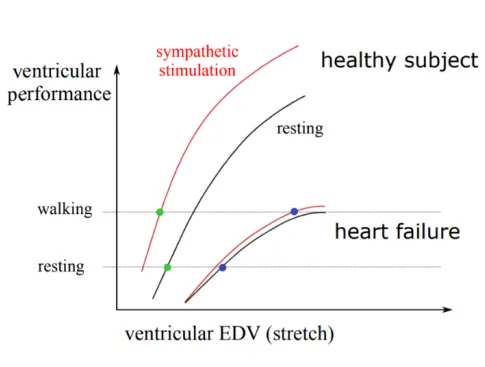
- フランクFrankフランク(Frank)Frank(フランク)・スターリング機構(血液量↑ → 伸展 → 収縮増強。HFで特に依存)
- 交感神経刺激(変力作用inotropy変力作用(inotropy)inotropy(変力作用)/変時作用chronotropy変時作用(chronotropy)chronotropy(変時作用)/伝導性dromotropy伝導性(dromotropy)dromotropy(伝導性)↑。ただしHF患者は交感神経系SYM交感神経系(SYM)SYM(交感神経系)が既にほぼ最大稼働で利益が乏しく、運動時はフランクFrankフランク(Frank)Frank(フランク)・スターリング機構に頼る)
- 長期:
- 塩水貯留RAAS塩水貯留(RAAS)RAAS(塩水貯留)短期 前負荷↑ → 心拍出量(CO)↑、長期 浮腫/肺水腫・心負担↑
- 肥大/リモデリング
仕事量への反応
| 状態 | 反応 |
|---|---|
| 健常 | 歩行 → SYM刺激で拡張終期容積end-diastolic volume (EDV)拡張終期容積(end-diastolic volume (EDV))end-diastolic volume (EDV)(拡張終期容積)を上げず収縮力↑ → 十分な CO 予備力reserve予備力(reserve)reserve(予備力) |
| 心不全(HF) | フランクFrankフランク(Frank)Frank(フランク)・スターリング曲線が平坦、SYM効果が乏しい → フランクFrankフランク(Frank)Frank(フランク)・スターリングに頼る → 歩行で EDV↑ → CO 予備力reserve予備力(reserve)reserve(予備力)が極小 |
神経体液性・細胞レベルの変化
細胞レベル
- Ca²⁺ が RyR2 から SR外へ漏出、SERCA活性↓ → 収縮弱化、弛緩障害diastolic dysfunction弛緩障害(diastolic dysfunction)diastolic dysfunction(弛緩障害)、収縮延長 → QT延長 → 悪性不整脈。
- エネルギー転換energy shiftエネルギー転換(energy shift)energy shift(エネルギー転換): 脂肪酸酸化fatty acid oxidation脂肪酸酸化(fatty acid oxidation)fatty acid oxidation(脂肪酸酸化) → グルコース酸化glucose oxidationグルコース酸化(glucose oxidation)glucose oxidation(グルコース酸化)。予備が減り心臓は脆弱、ATP↓/ADP↑ → 弛緩能lusitropy弛緩能(lusitropy)lusitropy(弛緩能)↓。
神経体液性反応(短期有益・長期有害)
| 機序 | 短期の利益 | 長期の害 |
|---|---|---|
| 塩水貯留salt and water retention塩水貯留(salt and water retention)salt and water retention(塩水貯留)(前負荷↑) | CO↑ | 浮腫、肺水腫 |
| 血管収縮(後負荷afterload後負荷(afterload)afterload(後負荷)↑) | 血圧↑ | CO↓、エネルギー需要↑ |
| 心刺激cardiac stimulation心刺激(cardiac stimulation)cardiac stimulation(心刺激)(収縮力/心拍数(HR)↑) | CO↑ | エネルギー需要↑、不整脈、突然死 |
- 炎症反応(低レベル):
- 適応的adaptive適応的(adaptive)adaptive(適応的)=保護蛋白(熱ショック蛋白、heat shock protein)
- 不適応的maladaptive不適応的(maladaptive)maladaptive(不適応的)=心臓性悪液質cardiac cachexia心臓性悪液質(cardiac cachexia)cardiac cachexia(心臓性悪液質)、アポトーシス、壊死
- 肥大反応hypertrophic response肥大反応(hypertrophic response)hypertrophic response(肥大反応): 細胞ストレス+血行動態+炎症シグナルが遺伝子発現を変化 → リモデリング、エネルギー消費energy expenditureエネルギー消費(energy expenditure)energy expenditure(エネルギー消費)↑、アポトーシス↑ → 重篤な不整脈。
治療
基本:
- 原因治療
- 誘発因子の除去
- 対症療法
- 心臓・循環の支持
対症療法
- 利尿薬: RAAS駆動の容量負荷volume overload容量負荷(volume overload)volume overload(容量負荷)に拮抗 → 浮腫↓。後方不全backward failure後方不全(backward failure)backward failure(後方不全)を改善(前負荷↓)するが前方不全forward failure前方不全(forward failure)forward failure(前方不全)を悪化させうる(駆出ejection駆出(ejection)ejection(駆出)/CO↓)。
- 植込み型除細動器implantable cardioverter-defibrillator, ICD植込み型除細動器(implantable cardioverter-defibrillator, ICD)implantable cardioverter-defibrillator, ICD(植込み型除細動器): リズム監視。徐脈をペーシング、悪性不整脈をオーバードライブペーシングoverdrive pacingオーバードライブペーシング(overdrive pacing)overdrive pacing(オーバードライブペーシング)/直流除細動DC shock直流除細動(DC shock)DC shock(直流除細動)で停止。
薬物(「弱った馬」の例え)
💡 発想の転換: 鞭を入れて(収縮力↑)走らせる薬は症状を改善しても生存を縮める。逆に負荷を下げて(RAAS遮断)ゆっくり効率よく走らせる薬が生存を延ばす。
- 収縮力↑:
- ジギタリスdigitalisジギタリス(digitalis)digitalis(ジギタリス)(症状改善・生存改善なし・毒性 → 不使用)
- β受容体刺激薬(症状改善も生存↓、慢性不可)
- 負荷↓: RAAS遮断の血管拡張薬vasodilator血管拡張薬(vasodilator)vasodilator(血管拡張薬) → 症状と生存を改善:
- ACE阻害薬
- アンジオテンシンangiotensinアンジオテンシン(angiotensin)angiotensin(アンジオテンシン)II受容体拮抗薬
- アルドステロン拮抗薬aldosterone antagonistsアルドステロン拮抗薬(aldosterone antagonists)aldosterone antagonists(アルドステロン拮抗薬)(線維化をブロック)
- ゆっくり効率的に拍動:
- β遮断薬(一時的に症状悪化も長期生存改善)
- I_f阻害薬 イバブラジンivabradineイバブラジン(ivabradine)ivabradine(イバブラジン)(β遮断薬不耐用=喘息等)
- 心臓移植heart transplantation心臓移植(heart transplantation)heart transplantation(心臓移植)。
- 左室補助人工心臓left ventricular assist device (LVAD)左室補助人工心臓(left ventricular assist device (LVAD))left ventricular assist device (LVAD)(左室補助人工心臓) — 移植までの橋渡し(bridge)、今や数か月使用可(新型は心膜腔pericardial cavity心膜腔(pericardial cavity)pericardial cavity(心膜腔)に収まる)。
- 新規:
- ネプリライシン阻害薬NEP inhibitorsネプリライシン阻害薬(NEP inhibitors)NEP inhibitors(ネプリライシン阻害薬)(BNP↑)
- アンジオテンシン受容体ネプリライシン阻害薬angiotensin receptor-neprilysin inhibitor (ARNI)アンジオテンシン受容体ネプリライシン阻害薬(angiotensin receptor-neprilysin inhibitor (ARNI))angiotensin receptor-neprilysin inhibitor (ARNI)(アンジオテンシン受容体ネプリライシン阻害薬)(バルサルタンvalsartanバルサルタン(valsartan)valsartan(バルサルタン)/サクビトリルsacubitrilサクビトリル(sacubitril)sacubitril(サクビトリル))
- SGLT2阻害薬(糖尿病の有無に関わらず生存延長)
- 「ファンタスティック4(“Fantastic 4”)」:ARNI・β遮断薬・ミネラルコルチコイド受容体拮抗薬mineralocorticoid receptor antagonist, MRAミネラルコルチコイド受容体拮抗薬(mineralocorticoid receptor antagonist, MRA)mineralocorticoid receptor antagonist, MRA(ミネラルコルチコイド受容体拮抗薬)・SGLT2阻害薬
- さらに PDE5阻害、microRNA/遺伝子治療、幹細胞治療cell therapy細胞治療(cell therapy)cell therapy(細胞治療)