Pathophysiology · 1-25
女性ホルモン調節の異常
Disorders of female hormonal regulation
🧠 2大病態を対比で覚える: PMOS は「アンドロゲン高・LH/FSH高・肥満/インスリン抵抗性」、FHA(機能性視床下部性無月経functional hypothalamic amenorrhea (FHA)機能性視床下部性無月経(functional hypothalamic amenorrhea (FHA))functional hypothalamic amenorrhea (FHA)(機能性視床下部性無月経))は「アンドロゲン低・LH/FSH低・低エネルギー(ダイエット/運動)」。どちらも無月経だが原因は正反対。
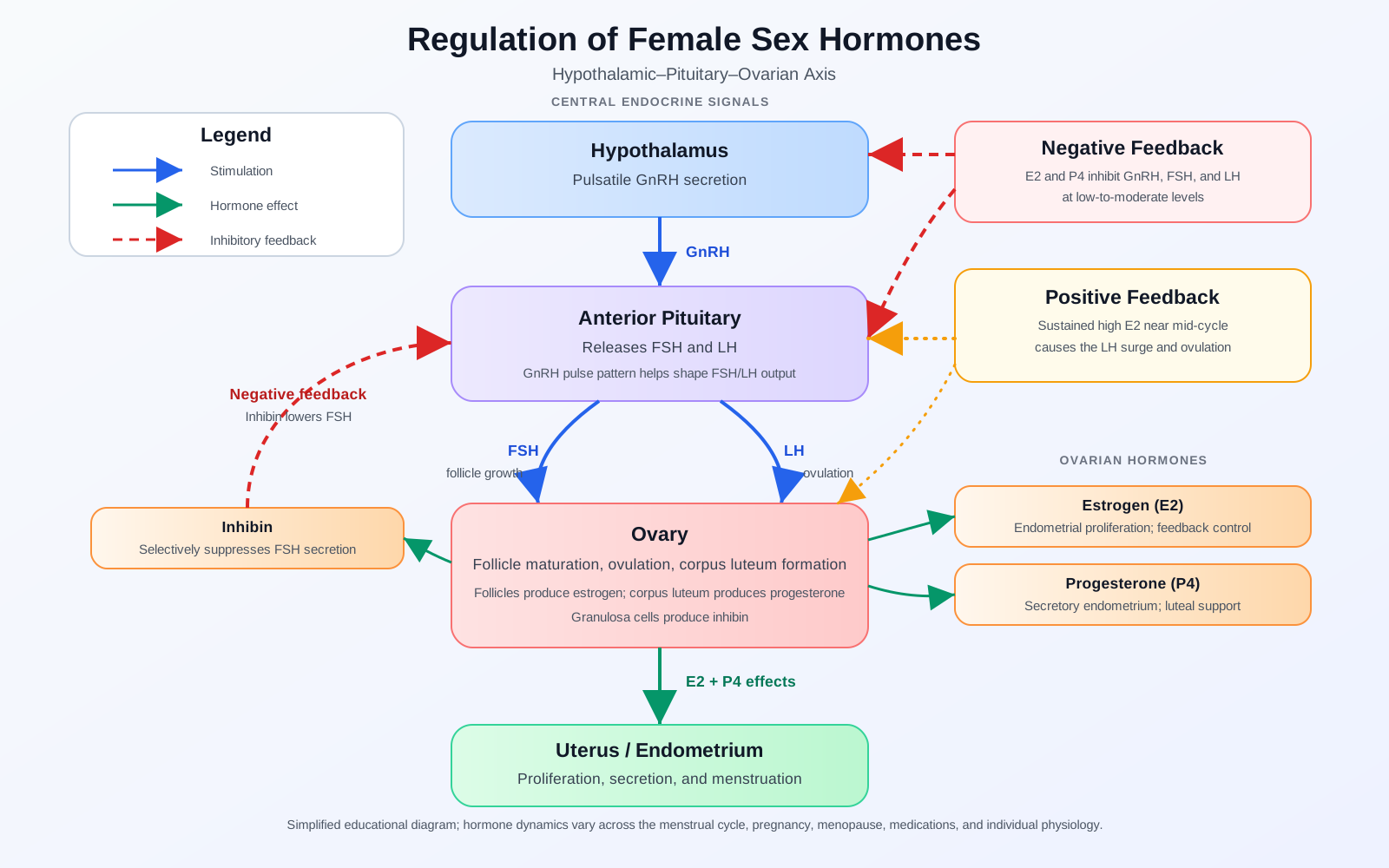
女性性ホルモンの調節
- GnRH → FSH+LH → 卵巣。
- FSH → 顆粒膜細胞granulosa cell顆粒膜細胞(granulosa cell)granulosa cell(顆粒膜細胞)→ エストロゲン+インヒビンinhibinインヒビン(inhibin)inhibin(インヒビン)。
- LH → 莢膜細胞theca cell莢膜細胞(theca cell)theca cell(莢膜細胞)→ プロゲスチンprogestinプロゲスチン(progestin)progestin(プロゲスチン)+アンドロゲン(→ アロマターゼでエストラジオール)。
無月経
- 原発性(症状=思春期欠如/遅延):
- 性腺発生異常gonadal dysgenesis性腺発生異常(gonadal dysgenesis)gonadal dysgenesis(性腺発生異常)(ターナー症候群Turner syndromeターナー症候群(Turner syndrome)Turner syndrome(ターナー症候群)(Turner、45,X0))
- アンドロゲン不応症androgen insensitivity syndrome, AISアンドロゲン不応症(androgen insensitivity syndrome, AIS)androgen insensitivity syndrome, AIS(アンドロゲン不応症)
- PMOS
- GnRH欠如(±嗅覚脱失anosmia嗅覚脱失(anosmia)anosmia(嗅覚脱失)/カルマン症候群Kallmann syndromeカルマン症候群(Kallmann syndrome)Kallmann syndrome(カルマン症候群))
- 続発性/希発月経oligomenorrhea希発月経(oligomenorrhea)oligomenorrhea(希発月経)(症状=不妊・性欲libido性欲(libido)libido(性欲)↓・腟萎縮vaginal atrophy腟萎縮(vaginal atrophy)vaginal atrophy(腟萎縮)・ホットフラッシュhot flashesホットフラッシュ(hot flashes)hot flashes(ホットフラッシュ)・骨粗鬆osteoporosis骨粗鬆(osteoporosis)osteoporosis(骨粗鬆)症):
- FHA
- PMOS
- 高プロラクチン血症hyperprolactinemia高プロラクチン血症(hyperprolactinemia)hyperprolactinemia(高プロラクチン血症)(±甲状腺機能低下hypothyroidism甲状腺機能低下(hypothyroidism)hypothyroidism(甲状腺機能低下)症)
- 薬剤性
- 閉経
機能性視床下部性無月経
💡 エネルギー不足が GnRH を止める。 レプチンleptinレプチン(leptin)leptin(レプチン)(脂肪量のシグナル)が GnRH を支えており、ダイエット/低栄養malnutrition低栄養(malnutrition)malnutrition(低栄養)でレプチンleptinレプチン(leptin)leptin(レプチン)↓ → GnRH↓。強いストレスは CRH↑ で GnRH を抑制。
- 病態: 低栄養malnutrition低栄養(malnutrition)malnutrition(低栄養)/ダイエット → レプチンleptinレプチン(leptin)leptin(レプチン)↓ → GnRH↓;強い身体的ストレス → CRH↑ → GnRH↓。
- 帰結:
- ACTH/コルチゾール↑
- FSH/LH/エストラジオール↓
- TSH/T3↓
多嚢胞性卵巣症候群(PMOS、旧PCOS)
女性の 5–20%。2026年5月、国際的な合意プロセスprocessプロセス(process)process(プロセス)を経て名称が polyendocrine metabolic ovarian syndrome(PMOS) に改められた(旧称:polycystic ovary syndrome、PMOS)。卵巣に見えるのは発育が停止した胞状卵胞antral/Graafian follicle胞状卵胞(antral/Graafian follicle)antral/Graafian follicle(胞状卵胞)であって真の病的嚢胞ではなく、「多嚢胞性」という呼称が病態を正しく表していないことが改称の理由の一つである。
flowchart TD
  N["<span class='jp-term jp-term-diagram' title='pulsatile'>拍動性</span>GnRHの異常 → LH↑・FSH↓(LH≥2×)"] --> TH["<span class='jp-term jp-term-diagram' title='theca cell'>莢膜細胞</span> → <span class='jp-term jp-term-diagram' title='androstenedione'>アンドロステンジオン</span>/テストステロン↑"]
  TH --> MET["代謝:<span class='jp-term jp-term-diagram' title='visceral fat'>内臓脂肪</span>↑・<span class='jp-term jp-term-diagram' title='adiponectin'>アディポネクチン</span>(adiponectin)↓ → インスリン抵抗性 → <span class='jp-term jp-term-diagram' title='hyperinsulinemia'>高インスリン血症</span>"]
  MET --> HI["遊離IGF↑・SHBG↓ → <span class='jp-term jp-term-diagram' title='free testosterone'>遊離テストステロン</span>↑ → AMH↑"]
  HI --> FA["FSH遮断 → <span class='jp-term jp-term-diagram' title='follicular arrest'>卵胞停止</span>"]
  TH --> FA
  FA --> PCO["多嚢胞性卵巣"]
病態機序
- 神経内分泌: GnRH 異常 → LH↑、FSH↓ → 莢膜細胞theca cell莢膜細胞(theca cell)theca cell(莢膜細胞) → アンドロステンジオンandrostenedioneアンドロステンジオン(androstenedione)androstenedione(アンドロステンジオン)/テストステロン↑。顆粒膜細胞granulosa cell顆粒膜細胞(granulosa cell)granulosa cell(顆粒膜細胞)がエストラジオールに変換 → 子宮内膜増殖endometrial hyperplasia子宮内膜増殖(endometrial hyperplasia)endometrial hyperplasia(子宮内膜増殖)(→ 癌)。
- 代謝: 脂肪分解lipolysis脂肪分解(lipolysis)lipolysis(脂肪分解)↓ → 内臓脂肪visceral fat内臓脂肪(visceral fat)visceral fat(内臓脂肪)↑、アディポネクチンadiponectinアディポネクチン(adiponectin)adiponectin(アディポネクチン)↓ → インスリン抵抗性 → 高血糖+肝脂肪化hepatic steatosis肝脂肪化(hepatic steatosis)hepatic steatosis(肝脂肪化)。
- 高インスリン血症hyperinsulinemia高インスリン血症(hyperinsulinemia)hyperinsulinemia(高インスリン血症): 遊離IGF↑、SHBG↓ → 遊離テストステロンfree testosterone遊離テストステロン(free testosterone)free testosterone(遊離テストステロン)↑ → AMH↑ → FSH遮断 → 卵胞停止follicular arrest卵胞停止(follicular arrest)follicular arrest(卵胞停止) → 多嚢胞性卵巣。
診断
成人では次の3項目のうち 2項目を満たし、他原因を除外して診断する。
- 排卵障害ovulatory dysfunction排卵障害(ovulatory dysfunction)ovulatory dysfunction(排卵障害)/無排卵oligo-/anovulation無排卵(oligo-/anovulation)oligo-/anovulation(無排卵) 2. アンドロゲン過剰androgen excess (hyperandrogenism)アンドロゲン過剰(androgen excess (hyperandrogenism))androgen excess (hyperandrogenism)(アンドロゲン過剰) 3. 多嚢胞性卵巣形態polycystic ovarian morphology多嚢胞性卵巣形態(polycystic ovarian morphology)polycystic ovarian morphology(多嚢胞性卵巣形態)(超音波)
- 2023年の国際エビデンスガイドラインでは、成人に限り3.の超音波の代わりに 血清AMH を用いてよい。月経不順とアンドロゲン過剰androgen excess (hyperandrogenism)アンドロゲン過剰(androgen excess (hyperandrogenism))androgen excess (hyperandrogenism)(アンドロゲン過剰)の両方が揃っていれば超音波もAMHも不要。
- 思春期では 1.と2.の両方が必須で、超音波・AMH は特異度が低いため用いない。
症状
- 短期: 多毛症hirsutism多毛症(hirsutism)hirsutism(多毛症)、脱毛、にきびacneにきび(acne)acne(にきび)、妊孕性低下、流産/早産。
- 長期: T2DM、脂質異常症dyslipidemia脂質異常症(dyslipidemia)dyslipidemia(脂質異常症)、子宮内膜癌endometrial cancer子宮内膜癌(endometrial cancer)endometrial cancer(子宮内膜癌)。
PMOS vs FHA
| 特徴 | PMOS | FHA |
|---|---|---|
| アンドロゲン | 高い | 低い/正常 |
| LH/FSH 比 | 高い | 低い |
| 関連 | 肥満/インスリン抵抗性 | ダイエット/低エネルギー |